

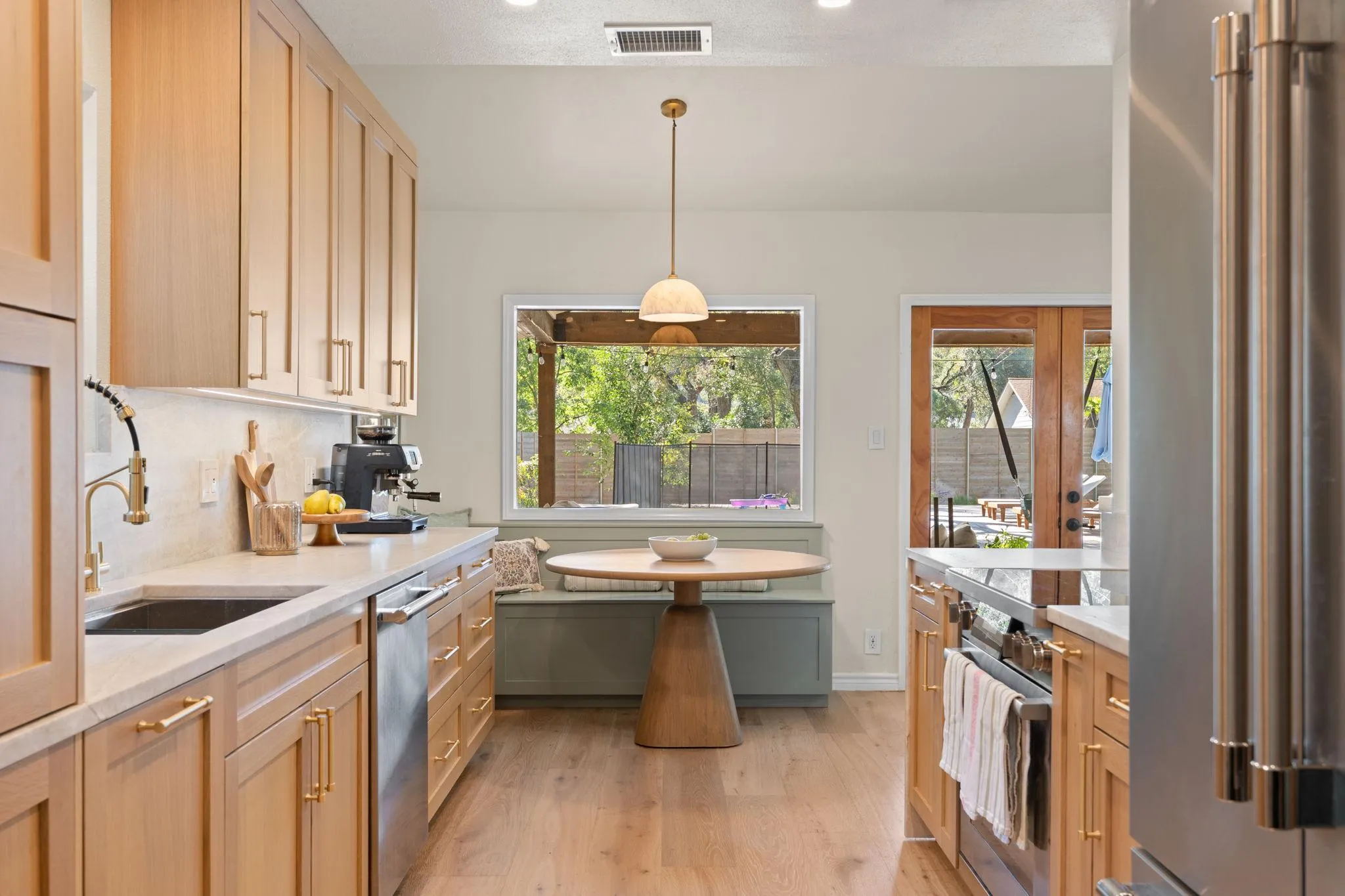
It’s Saturday morning. The coffee’s on, someone’s hunting for the good spatula, and the dog has parked himself exactly where everyone needs to walk. The kitchen is doing its best. It just wasn’t built for the way you live now.
That’s usually when the question shows up. How much does a kitchen remodel cost in Austin, anyway?
The honest answer depends on project scope and what you want the room to do. A kitchen that hosts twelve on game day asks for something different than one built for quiet mornings and Tuesday night tacos. Below, you’ll find what shapes the total cost, a simple cost breakdown, and how to plan a realistic budget that still feels good long after the dust settles.
Austin Kitchen Remodeling Costs: What to Expect
An average kitchen remodel cost only tells you so much. What really moves the number is project scope, and most kitchen remodel projects in Austin fall into three broad tiers. Mid range remodels lean on fresh finishes. High end remodels rethink how the whole room works.
| Project scope | What it usually looks like | Relative investment |
|---|---|---|
| The Refresh | The existing kitchen keeps its layout. Cosmetic updates like cabinet refacing, countertop replacement, new hardware, plumbing fixtures, and lighting. | Lightest |
| The Full Remodel | Same footprint, everything new. Full cabinet replacement with semi custom or custom cabinetry, natural stone counters, appliance upgrades, and new flooring. | Moderate |
| The Custom Kitchen Remodel | Walls come down and the island grows. Layout changes, moving plumbing and gas, structural modifications, custom lighting, and luxury appliances. | Most significant |
Where a project lands depends on the house as much as the plans. A 1950s ranch in Allandale and a newer build in Steiner Ranch can share the same wish list and still price out differently once the walls are open. Square foot estimates and rough measurements get the conversation started. The house tells the rest.
Older homes sometimes keep secrets. Outdated wiring, cast iron drains, plumbing tucked into exterior walls, a beam right where the island should go. Careful planning accounts for that early, so the overall budget doesn’t wander later.
What Shapes Kitchen Remodeling Cost in Austin
A handful of decisions do most of the heavy lifting.
The size of the kitchen. Larger kitchens simply need more. More cabinetry, more countertop, more flooring, and more hours of skilled labor. A tidy galley and an open kitchen with a ten-foot island are working with very different math.
The layout. If the current layout works, keeping the sink, range, and fridge in place keeps costs grounded. Layout changes mean moving plumbing, gas, and electrical work, and structural changes like moving walls bring in engineering and support. Even minor structural changes can significantly impact the remodel cost. It’s often worth it. The room everyone ends up in should actually have room for everyone, and opening up to the dining area and other rooms changes how the whole house flows.
Cabinetry. Cabinets tend to be the biggest single line in the budget, and for good reason. They decide where everything lives. Refacing cabinets keeps the existing cabinet boxes and updates the door style, drawer fronts, and hardware. New cabinets open up the whole plan, with soft close hardware, a real home for the air fryer, and no more drawer that always gets stuck.
Countertops. Countertop material plays a big role. Quartz, quartzite, marble, and other natural stone all sit at different price points. Thickness, edge profiles, and a waterfall end add up too. So does the size of the island, which, let’s be honest, is where someone is always leaning anyway.
Appliances. Appliance selections can swing the budget more than people expect. A standard suite and a lineup of panel-ready luxury appliances land in very different places, and smart home integration adds another layer. The right choice depends on how you cook and how often the kitchen fills up.
Lighting and electrical. Layered lighting changes how the room feels at 6 a.m. and again at 9 p.m. Recessed lights, pendants over the island, and custom lighting tucked under the cabinets all need a plan. Older Austin homes often need panel or wiring updates to support them.
Plumbing. New plumbing fixtures in the same spot are refreshingly simple. Plumbing modifications, like moving the sink to the island or adding a pot filler by the range, take more work behind the walls.
Labor and lead times. Labor costs reflect how busy the Austin market stays, and rates for skilled trades have climbed noticeably since 2023. Material availability and material lead times shape the schedule too, which is why selections are usually locked in well before construction begins.
Permits and inspections. Substantial kitchen remodeling projects in Austin typically need building, electrical, and plumbing permits through the City of Austin. Permit fees are a small slice of the total cost, but timing matters, so permit costs and approvals belong in the plan from day one.
Where the Budget Actually Goes
Every kitchen splits its budget a little differently, but the pattern is familiar. Here’s a general cost breakdown for most kitchen remodel projects.
| Category | How much of the budget it usually takes |
|---|---|
| Cabinetry and hardware | The largest share, often 30 to 35 percent |
| Installation and craftsmanship | A significant share |
| Countertops | A moderate share that shifts with the material |
| Appliances | A moderate share that varies widely |
| Plumbing, electrical, and lighting | Grows with layout changes |
| Flooring, backsplash, and finishes | A smaller share |
Cabinets and craftsmanship carry the most weight. Most Austin homeowners also find they’re the parts touched every single day, which makes them the last place worth cutting corners. A drawer you open forty times a week should glide like it means it.
Planning a Budget That Feels Good Later
The best budgets start with how you want to live, then work backward.
Start with the moments. Sunday pancakes with flour on the counter. Friends drifting in from the patio while dinner finishes. Coffee before the neighborhood wakes up. Those moments tell you where the money should go and what a functional layout looks like for you. Maybe that’s a longer island. Maybe it’s a quieter range hood, or a coffee station that keeps morning traffic out of the cook’s way.
Then see it before it’s built. Accurate measurements and 3D renderings let you walk through the new layout, open the drawers, and check the view from the sofa before a single cabinet is ordered. Moving an outlet on a screen is a lot easier than moving it on a finished wall.
Leave a little breathing room, too. Many Austin homeowners set aside 10 to 20 percent as a contingency, which keeps the project calm if the walls reveal something unexpected. In older Austin homes, they sometimes do.
Make the big decisions early. Late design changes are one of the most common reasons a remodel slows down, and choosing finishes and fixtures before construction begins gives longer lead time items room to arrive. A clear scope does the same thing for the budget.
And consider design-build, which brings design and construction together, so pricing gets clearer earlier, communication stays clear, and the drawings you fall for are drawings someone has already priced.
Frequently Asked Questions
What is the average kitchen remodel cost in Austin, TX?
It depends on project scope. Cosmetic updates and cabinet refacing sit at the lighter end. A full replacement with custom cabinets, layout changes, or moving plumbing lands higher. A design consultation is the quickest way to a realistic budget for your home.
How long does kitchen remodeling in Austin take?
Cosmetic updates can wrap in 1 to 2 weeks. Mid-range remodels usually take 6 to 10 weeks, and full remodels run 8 to 16 weeks or more. For custom kitchens, the design process alone often takes 2 to 3 months, and it’s time well spent.
Do I need a permit for a kitchen remodel in Austin?
Usually, yes, if the work touches plumbing, electrical, gas, or walls. Cosmetic updates like paint or new hardware typically don’t need one. A good remodeling team handles permits and inspections so you don’t have to.
Is a kitchen remodel worth the investment?
Kitchens are one of the strongest remodels for resale value, and they’re the room you’ll use most while you’re still living there. Every breakfast, every late dinner, every crowded holiday. That daily return is hard to put a price on.
Can I live at home during an Austin kitchen remodel?
Most people do. A temporary setup with a microwave, coffee maker, and the trusty air fryer goes a long way. Expect a few weeks of takeout and paper plates. Cereal somehow tastes better anyway.
How can I keep my kitchen remodel cost down?
Keeping the sink, range, and fridge in place saves the most. Spend where your hands go every day, like cabinetry—which can consume 30-35% of the remodel budget—and counters, and stay flexible on decorative pieces. Making decisions early also helps avoid costly changes mid-project.
Should I reface my cabinets or replace them?
Refacing keeps your existing cabinet boxes and updates the door style, drawer fronts, and hardware. New cabinets let you change sizes, storage, and the layout itself. If the boxes are solid and the layout works, refacing can be a smart move.
Let’s Design the Kitchen You’ll Actually Live In
Somewhere in your house, a kitchen is ready to work a little better. More counter for the Sunday spread. A drawer that holds everything. Warm light that makes the whole room feel easy by evening.
If you’re planning a kitchen remodel in Austin, TX, or nearby in Cedar Park or Round Rock, the first step is a conversation. Talk through how you use the space, what you’d love to change, and a realistic budget for getting there. Then see your new kitchen in 3D before anything is built.
Schedule Your Consultation and see what’s possible.


